Maintenance is what keeps your forklift reliable, safe, and available day after day. Well-maintained equipment breaks down less often, lasts longer, and costs less to operate. But how often should it actually be serviced?
The answer depends on three main factors:
- The type of forklift: electric, propane, or diesel
- The work environment: indoor, outdoor, dusty, or cold
- The number of hours of use per week
Here are the key guidelines to help you build a maintenance schedule adapted to your reality.
1. Daily Inspection
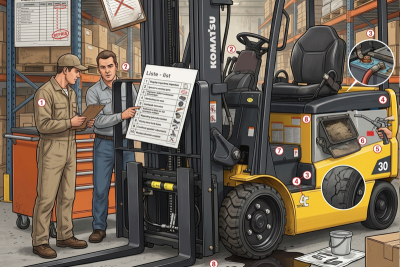
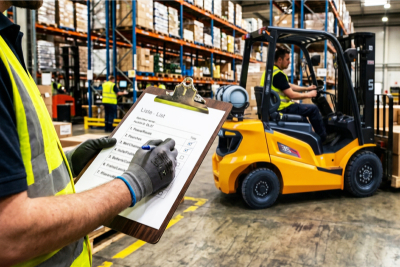
Performed by the operator at the beginning of each shift, the daily inspection consists of a quick visual and functional check of the equipment: brakes, steering, horn, backup alarm, leaks, tires, forks, and fluid levels.
It only takes a few minutes, but it helps identify an issue before it turns into a costly breakdown. Any defect that could compromise safety should result in the equipment being taken out of service immediately.
2. Periodic Preventive Maintenance
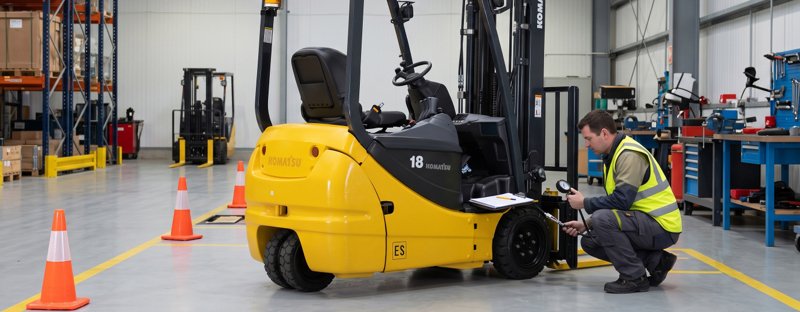
Preventive maintenance plays a central role in managing your equipment. In general, it is recommended every 250 to 500 hours of use, depending on the manufacturer’s recommendations.
This maintenance usually includes:
- Oil changes and filter replacement
- Inspection of the brakes and hydraulic system
- Verification of the mast, chains, and forks
- Inspection of safety components
Regular preventive maintenance also helps protect your investment in the long term and is often tied to the conditions of your warranty.
3. Major Maintenance
When the equipment reaches a higher number of operating hours, generally between 1,000 and 2,000 hours or more, more in-depth maintenance becomes necessary. This includes a thorough inspection of the engine, transmission, brakes, and structural components. It is the ideal time to anticipate wear and plan replacements before they immobilize your forklift.
Factors That Reduce Maintenance Intervals
The frequencies above are general guidelines. Certain conditions require more frequent maintenance:
- A dusty or abrasive environment
- Intensive use over several shifts per day
- Outdoor work or difficult conditions such as cold or humidity
The type of forklift also influences maintenance requirements: an electric model generally requires less mechanical maintenance than a combustion model. To better understand these differences, read our article on the different types of forklifts.
Trust Certified Technicians With Your Maintenance
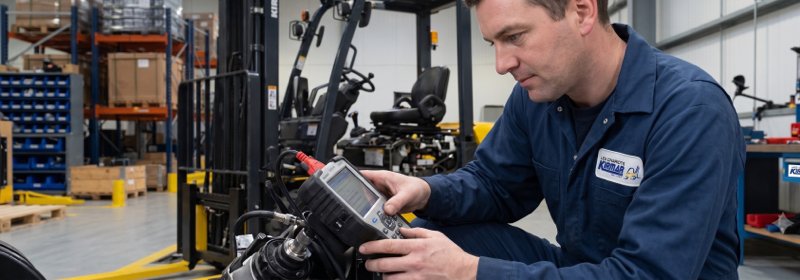
A good maintenance schedule is only valuable when it is followed consistently. At Les chariots Kirmar, our teams of certified technicians handle maintenance, repairs, and parts for your fleet, with road service available throughout Greater Montreal. Unexpected breakdown? We come directly to your facility to limit operational downtime.
Schedule your next maintenance appointment or request a service call: our team will take care of the rest.