A well-maintained forklift costs less to operate, lasts longer, and is far less likely to break down at the worst possible time. Most major failures do not happen all at once: they start with a small warning sign that is ignored and worsens over time. Here are the ten most common maintenance mistakes, what they can lead to in practical terms, and how to avoid them.
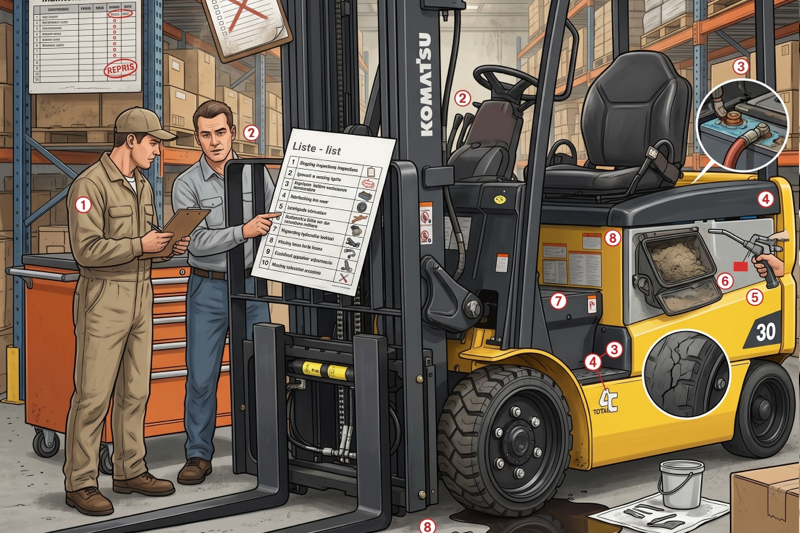
1. Neglecting daily inspections
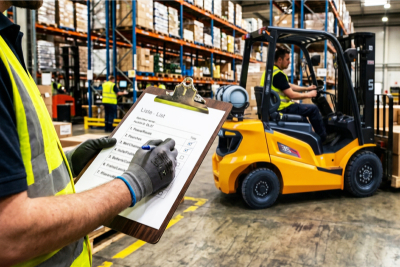
This is the most common mistake and the one that costs the most in the long run. A forklift used throughout the day naturally accumulates wear: a tire that starts losing air, a leak that begins, or a fork that starts to crack. Without a check at the beginning of the shift, these issues go unnoticed until a component fails during operation, often at the worst possible time. In addition, daily inspections are also a clear expectation from the CNESST.
The solution: implement a mandatory checklist, signed by the operator at the beginning of each shift. Train your operators to recognize the signs to watch for, record every defect, and report it quickly to the person in charge. Our daily inspection checklist gives you a ready-to-use starting point.
2. Delaying preventive maintenance
Postponing an oil change or filter replacement may seem harmless at first. However, the intervals recommended by the manufacturer exist for a reason: after a certain number of operating hours, the oil and filters no longer protect the equipment effectively. Contaminants begin to circulate, accelerating wear on the engine, transmission, and hydraulic system. Delayed maintenance often turns into a much larger repair.
The solution: monitor the hour meter and strictly follow the manufacturer’s maintenance schedule. Plan service visits during quieter periods to limit the impact on production, and rely on a team that can work directly on your site.
3. Ignoring minor hydraulic leaks
The hydraulic system controls the lifting, lowering, and tilting of the mast: it is the functional heart of the forklift. A small leak at a fitting or seepage on a hose points to a seal or connection that is deteriorating. If left unaddressed, it causes a loss of pressure that affects lifting precision and safety, not to mention oil on the floor, which becomes a slip hazard. A leak never resolves itself.
The solution: regularly inspect hydraulic hoses and fittings, and take action as soon as a leak is detected before it damages more expensive components.
4. Poor battery management on electric forklifts
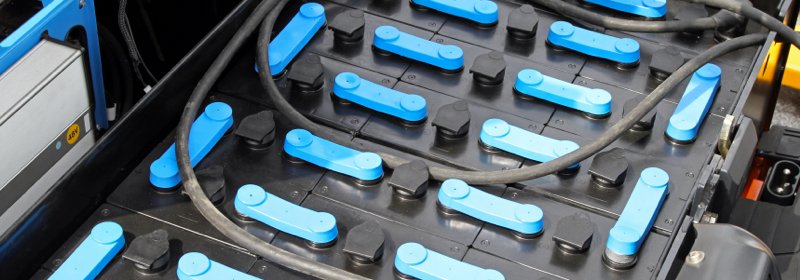
On an electric forklift, the battery is one of the most important parts of the equipment. Improper charging cycles, such as repeated partial charges at the wrong time, overly deep discharges, or unchecked electrolyte levels on lead-acid batteries, can significantly reduce battery life and autonomy. Lithium batteries are more forgiving, but they also have their own charging best practices.
The solution: follow the recommended charging cycles, regularly check the battery’s level and condition, provide a proper charging area, and follow the manufacturer’s instructions specific to your battery type.
5. Lack of lubrication on critical components
Mast chains, rollers, bearings, and pivot points work constantly under load. Without proper lubrication, friction increases, parts heat up, and components wear prematurely. A poorly lubricated chain stretches, loses reliability, and can eventually compromise lifting performance. This is a silent type of wear, but one of the most costly.
The solution: follow the lubrication schedule recommended by the manufacturer, use the right lubricant, and adjust the frequency based on usage intensity and the working environment.
6. Ignoring unusual noises or vibrations
An unusual noise, a new vibration, or a change in how the forklift behaves is almost always an early sign of a mechanical issue, such as a problem with a bearing, transmission, brake, wheel, or another component. The longer you wait, the more the affected component deteriorates and causes damage to other parts. In other words, what could have been a simple intervention can turn into a major repair.
The solution: train operators to immediately report any unusual noise or vibration, and have the issue diagnosed quickly before it spreads.
7. Using a forklift that is not suited to the application
A forklift that is poorly matched to its task wears out faster and operates outside its optimal range. A capacity that is too limited puts stress on the mast, hydraulics, and transmission; tires that are not suited to the surface reduce traction and accelerate wear; and a poorly chosen attachment can destabilize the load. Beyond wear and tear, this is also a safety issue.
The solution: make sure the capacity, tires, and attachments match the real working conditions. To make the right choice, read our articles on the different types of forklifts and lifting capacity.
8. Insufficient operator training
The way a forklift is driven has a direct impact on the lifespan of the equipment. Sudden acceleration, excessive speed, impacts with loading docks or racking: all of these actions increase wear. A well-trained operator protects the equipment and is also better able to spot abnormalities during inspections. Training is also mandatory in Quebec.
The solution: provide ongoing training focused both on safe operation and preventive driving practices that help preserve the equipment.
9. Exceeding the rated capacity
Overloading a forklift, even occasionally, places excessive stress on the mast, hydraulic system, tires, and transmission. This accelerates wear and, more importantly, reduces stability, which increases the risk of tipping. It is also important to remember that the actual capacity decreases when lifting higher or when adding an attachment.
The solution: never exceed the capacity shown on the nameplate and recalculate the capacity whenever an attachment is added. Our article on lifting capacity explains how to take this into account.
10. Neglecting tire condition
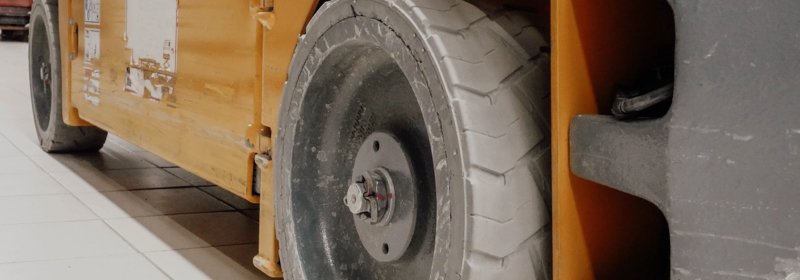
Tires are the only point of contact between the forklift and the ground: their condition directly affects traction, stability, and handling quality. Worn tires reduce grip, transfer more vibration to the entire machine, and make load control more difficult. Since this wear is gradual, it can easily be checked visually at each shift.
The solution: inspect tires at every shift and replace them as soon as wear justifies it, while choosing the right type for your working surface.
Preventive maintenance instead of emergency repairs
These ten mistakes have one thing in common: they turn small problems into major ones. The good news is that all of them can be avoided with a rigorous inspection routine and a well-followed maintenance program.
A structured maintenance and repair program helps you stay in control. Kirmar technicians travel throughout Greater Montreal and, when needed, you can quickly schedule a service call.
Would you like to set up a maintenance plan adapted to your fleet? Contact our team: we have been supporting businesses in the Montreal region since 1985.