
Winter brings its own set of challenges: intense cold, snow, ice, slippery surfaces, batteries losing capacity… Choosing a forklift for the cold season is not the same as choosing one for mild conditions. The right choice reduces the risk of incidents, improves productivity, and protects your equipment as well as your operators.
Here are the key criteria to prioritize when choosing a forklift suited to winter conditions.
1) Priority: Traction and Grip
In winter, surfaces often become:
- Wet
- Icy
- Snow-covered or covered in slush
In these conditions, traction is not an “extra”: it is the foundation of safety.
What to check before buying or renting:
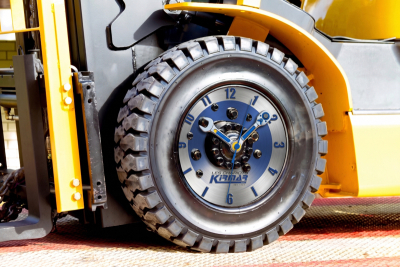
- Pneumatic tires: generally better for grip.
- Solid tires: much less traction and no possibility of installing chains.
- Option to add snow chains: a major advantage for outdoor use and high-risk areas.
Proper tires improve traction and reduce the risk of slipping, losing control, and longer braking distances.
2) Power Source: Electric or Internal Combustion?
The right choice mainly depends on your reality: indoor use, outdoor use, mixed use, shift duration, access to a heated area, and so on.
Electric Forklifts
Advantages
- No emissions, which is very useful indoors.
- Quieter operation.
Disadvantages
- The battery is affected by the cold, which reduces operating time.
- Requires a charging plan and ideally a heated area to optimize performance.
Key takeaway: Electric forklifts can work very well in winter, as long as you have proper charge management and a suitable environment.
Internal Combustion Forklifts: Gas, Diesel, or Propane
Advantages
- Perform well even in extreme cold.
- No loss of operating time related to battery capacity.
Disadvantages
- Emissions, which makes them less ideal for indoor use.
- Louder operation.
Key takeaway: For intensive outdoor use in winter, internal combustion often remains a strong and reliable option.
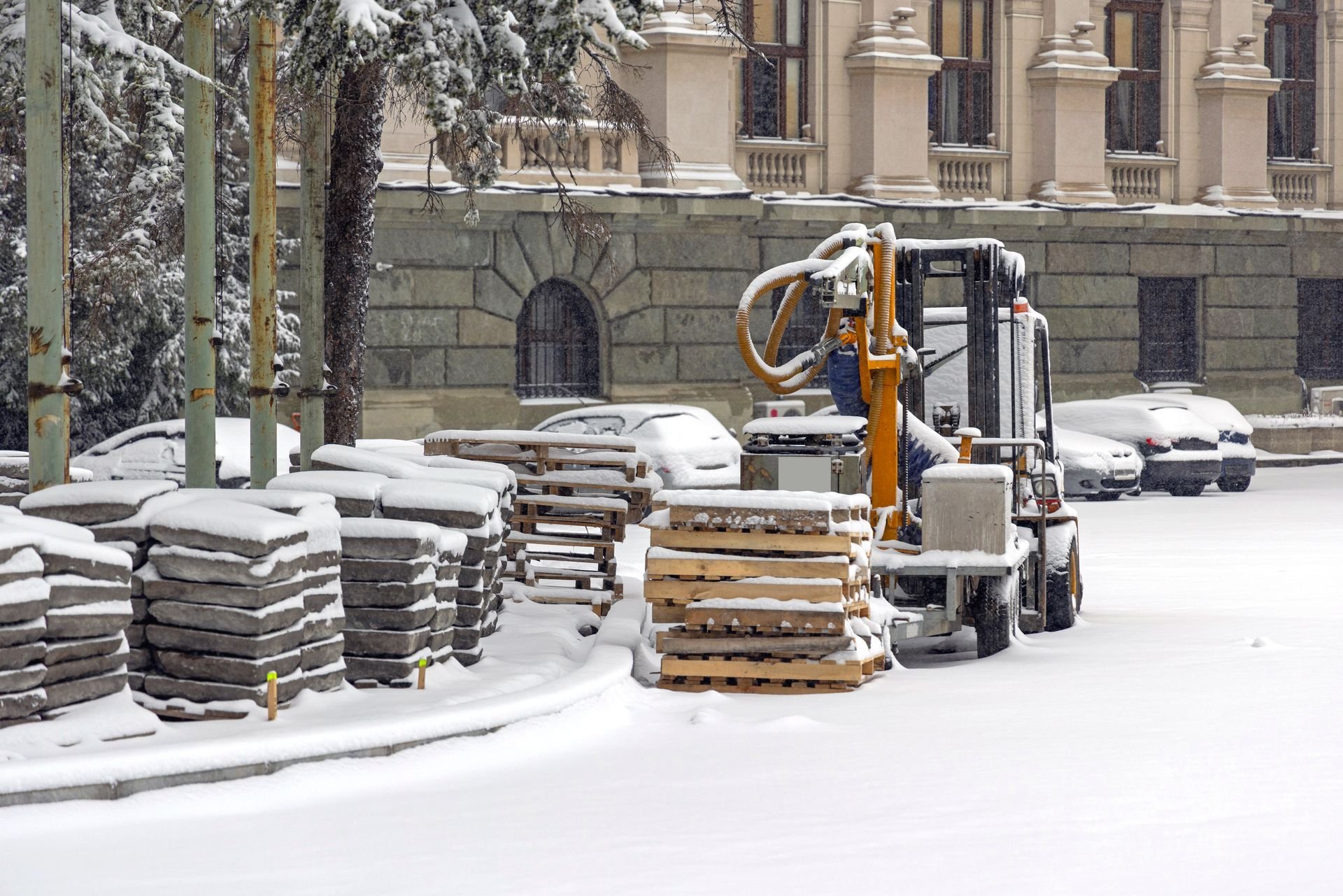
3) Cab Heating and Operator Comfort
In winter, an operator who is cold can quickly lose focus. The result: reduced efficiency, increased fatigue, and greater risk.
What to look for:
- An enclosed cab.
- An integrated heating system.
This is a direct investment in both safety and productivity, especially if your outdoor operations are frequent.
4) Cold-Start System
Cold weather can make starting the forklift more difficult, especially early in the morning or after a long period of downtime.
What to confirm:
- The presence of an engine preheating system, or
- Compatibility with a heated garage, depending on your organization.
A forklift that has trouble starting is a forklift that delays operations and puts added stress on the equipment.
5) Ease of Maintenance in Winter Conditions
In winter, maintenance becomes more frequent, especially for:
- Checking tire condition.
- Lubricating parts exposed to moisture.
- Monitoring the battery, if the forklift is electric.
What truly makes a difference:
- Easy access to maintenance service.
- A reliable service network.
- Parts available quickly.
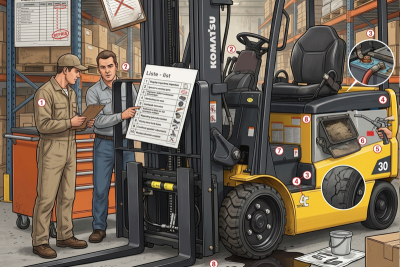
The goal is to reduce downtime, avoid breakdowns during critical periods, and maintain a steady pace even when the weather makes things more complicated.
In Summary
To choose a forklift that is ready for winter, prioritize:
- Proper tires for better traction.
- The right power source: electric if you have a heated charging plan, internal combustion if you operate outdoors in cold conditions.
- A heated cab for comfort and safety.
- Easy maintenance and fast service to reduce downtime.
Need an Outside Opinion on Your Operations?
At Les chariots Kirmar, we can help you identify the model best suited to your needs based on:
- Your surface type: ice, slopes, gravel, asphalt, warehouse floors.
- Your usage: indoor, outdoor, or mixed.
- Your requirements: capacity, lift height, operating time, accessories.
Send us your operating conditions, including location, surface type, shift duration, and typical loads, and we will guide you toward a reliable option to get through winter without unpleasant surprises.