A large portion of unexpected operational downtime could be avoided with one simple habit: inspecting the forklift before each use. A daily check, performed by the operator at the beginning of each shift, helps detect minor issues early before they turn into costly breakdowns. In Quebec, this inspection is also part of the expected best practices for workplace health and safety.
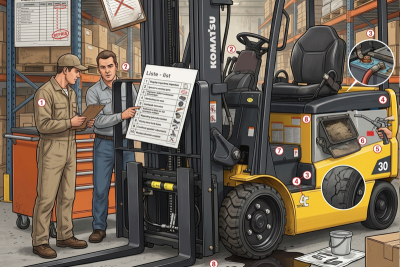
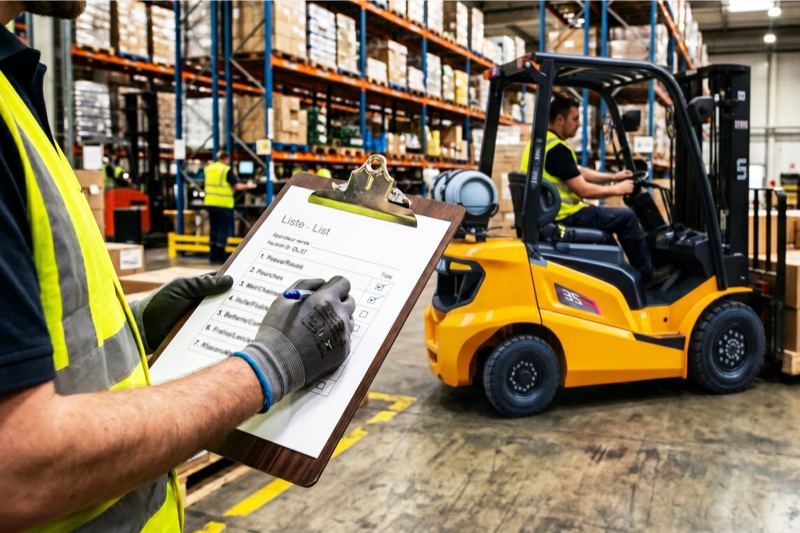
Here is a structured checklist your operators can follow in just a few minutes. Print it, have it signed at the beginning of each shift, and keep it in your records.
1. General visual inspection
- Check the overall condition of the forklift, including damage, cracks, and loose parts.
- Check for leaks, including engine oil, hydraulic fluid, fuel, and coolant.
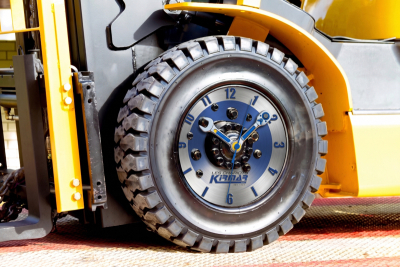
- Inspect the tires for wear, cuts, and pressure in the case of pneumatic tires.
Notes: A leak or crack detected early is almost always easier and usually more economical to fix than a major repair discovered too late.
2. Mast and lifting system
- Check the forks for wear, cracks, and deformation.
- Inspect the mast chains and rollers for tension and lubrication.
- Test the lifting, lowering, and tilting functions.
Notes: Deformed forks or a poorly maintained mast directly affect load stability. To properly match your equipment to your loads, read our article on how to determine the lifting capacity of your forklift.
3. Hydraulic system
- Check the hydraulic hoses and fittings.
- Make sure the attachments are working properly, such as the side shifter, fork positioner, and other accessories.
4. Engine compartment and battery
- Check fluid levels, including engine oil and coolant.
- Check the condition of the battery and its connections in the case of an electric forklift.
- Check for corrosion or damaged cables.
5. Safety features and controls
- Test the service brake and parking brake.
- Check the steering.
- Test the backup alarm and horn.
- Check the lights and warning beacons.
- Inspect the seat belt.
Notes: If a safety component is defective, the forklift must be taken out of service until it has been repaired.
6. Start-up and operation
- Check that there are no error lights on the dashboard.
- Listen for any unusual noise or vibration.
- Test forward and reverse movement.
What should you do if the inspection reveals a problem?

Record the defect, remove the equipment from service if needed, and schedule the intervention quickly. A team of qualified technicians can assist you with the maintenance and repair of your forklift, and our road service travels throughout Greater Montreal to help reduce your downtime. In case of emergency, you can schedule a service call directly online.
If one of your forklifts needs to be out of service for a longer period, forklift rental can help you keep your operations running without interruption.
In summary
A few minutes of inspection at the beginning of each shift is one of the most profitable habits for extending the lifespan of your fleet and reducing breakdowns. To go further, contact the Kirmar team: we have been supporting businesses across the Greater Montreal area with fleet maintenance and optimization since 1985.