
Lifting capacity is one of the most important things to know in order to operate a forklift safely. Lifting a load that is too heavy, or one that is poorly positioned, can cause mechanical damage, a loss of stability… and in the worst case, a tip-over.
Here is a simple, practical way to understand the real capacity of your forklift.
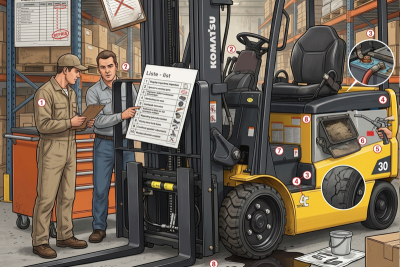
1) Check the Capacity Plate (Data Plate)
On every forklift, you will find a metal plate (often near the steering wheel or the seat) that indicates, among other things:
- The maximum capacity (e.g., 4,000 lbs, 5,000 lbs, etc.)
- The maximum lift height
- The load center (often 24 inches)
Key point: the capacity shown is valid only if the load is properly centered and lifted under the intended conditions(height, load center, truck configuration).
2) Understanding the Load Center
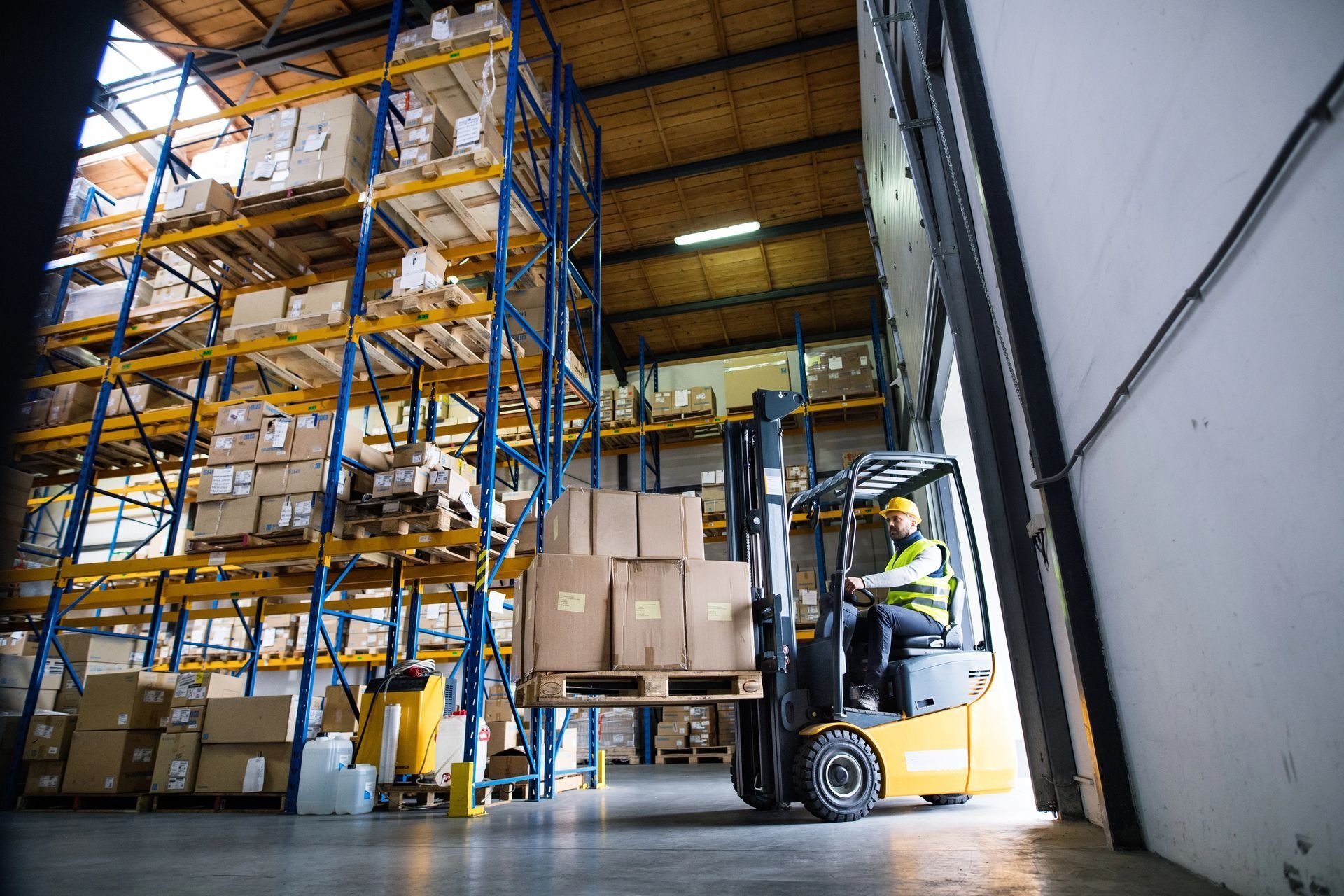
The load center is the distance between the back of the forks and the center of the load’s weight.
Example:
- A standard pallet generally has a load center of 24 inches.
- A load that is longer, poorly balanced or offset has a load center that sits farther out.
The farther the load is from the truck, the greater the leverage effect… and the lower the actual capacity. In other words: your forklift may be able to lift less weight than the capacity shown on the data plate if the load sits too far forward.
3) Height Also Affects Capacity
The higher you lift…
- the lower the stability;
- and the lower your actual capacity may be.
Some forklifts have load charts or different capacity ratings depending on lift height.
Best practice: if you need to lift at full height (racking, mezzanine, trailer), always check the capacity that applies at that height, not just the “general” capacity.
4) Attachments Change the Capacity
Here are a few examples of attachments that affect your forklift’s lifting capacity:
- a fork positioner
- a roll clamp
- fork extensions
Caution: these attachments add weight and shift the load center. The result: capacity automatically decreases, sometimes significantly.
Even if the attachment is designed to lift your load, that does not mean it is always safe (or compliant).
A Simple Rule to Remember
The maximum rated capacity is valid only if:
- the load is properly centered;
- the height limits are respected;
- and no heavy attachment has been added.
Otherwise, the actual capacity is lower.
Pro Tips (Important for Safety)
If you are not sure:
- Always allow a safety margin, or
- Ask your supplier / technician to confirm the actual capacity based on your load, your lift height and your attachments.
At Les chariots Kirmar, we can quickly help you confirm whether your forklift is suited to your loads (and help you avoid unpleasant surprises in terms of safety and mechanics).